
Katy: 281.971.2124
Why Does One Tooth Look Longer Than the Others?

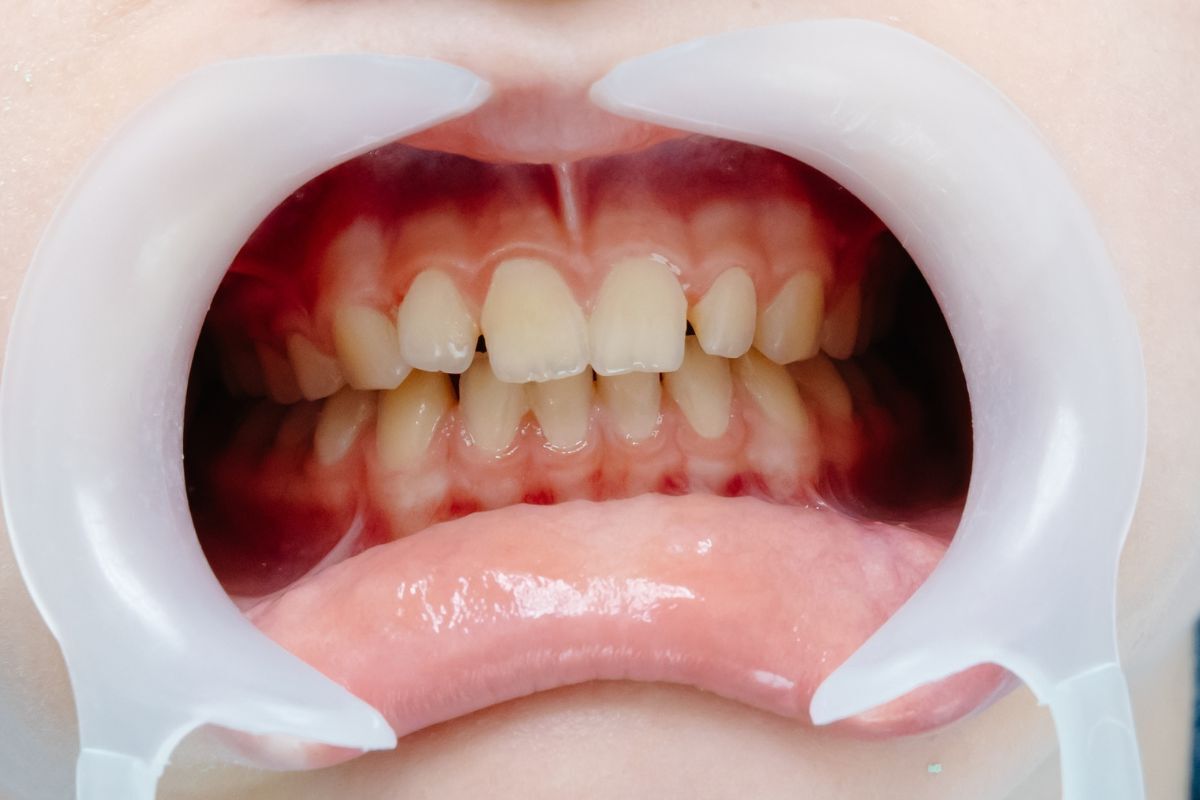
Have you ever looked closely at your smile and noticed that one tooth seems longer than the teeth beside it? Sometimes the difference has been present for years. In other cases, it develops gradually or appears surprisingly quickly. While an uneven tooth line may seem purely cosmetic, a tooth that looks unusually long can sometimes indicate changes in the gums, tooth position, wear, or surrounding oral structures.
That is why we recommend looking beyond appearance before deciding how to correct it. At Serenity Dental of Katy, Dr. Jeffrey Chung and our dental team evaluate both the tooth and the tissues surrounding it before recommending a solution.
If one tooth has started standing out in your smile, understanding why it looks longer is the first step toward determining whether treatment is appropriate.
Why Can One Tooth Look Longer Than the Others?
Teeth are not naturally identical. Small differences in shape and length are normal, particularly between different types of teeth. However, when one tooth appears noticeably longer than its counterpart or neighboring teeth, several factors may be responsible.
Importantly, the tooth itself may not actually have become longer. Changes around the tooth can expose more of its surface or alter the way it lines up with neighboring teeth.
Here are some common explanations.
1. Gum Recession Can Expose More of the Tooth
One of the most important reasons a tooth may suddenly appear longer is gum recession.
Healthy gum tissue surrounds the tooth and covers its root surface. When the gum margin moves downward, more of the tooth becomes visible. The tooth therefore appears longer even though its actual anatomical length has not changed.
Recession may affect one tooth more noticeably than surrounding teeth. Several factors can contribute, including aggressive brushing, gum inflammation, tooth position, and other oral health conditions.
You might also notice sensitivity, especially when you consume something cold or touch the exposed area.
Because recession involves the supporting tissues around a tooth, it should be evaluated rather than treated as an appearance issue alone.
2. Your Teeth May Naturally Be Different Sizes
Perfect symmetry is uncommon in a natural smile.
One central incisor, canine, or another tooth may simply have developed slightly differently from its counterpart. Differences in tooth shape can make one tooth appear longer, wider, narrower, or more prominent.
These variations are often harmless. If the tooth has always looked this way and your gums and bite are healthy, the difference may simply be part of your natural dental anatomy.
However, even a small difference can become visually prominent because our eyes tend to notice asymmetry in the front teeth.
For patients bothered by this imbalance, a cosmetic dentistry treatment may sometimes be considered after we confirm that there is no underlying oral health problem.
3. A Neighboring Tooth May Actually Be Too Short
An interesting point we frequently explain to patients is that the tooth attracting their attention may not be the problem.
Suppose your right front tooth appears longer than your left. The right tooth might have a completely normal length while the left tooth is shorter because of its natural shape, previous wear, or a small chip.
That difference creates the appearance that one tooth is unusually long.
This distinction matters because the appropriate solution depends on which tooth is actually creating the asymmetry. Simply altering the tooth that looks longer could produce an unnatural result if the neighboring tooth is actually responsible for the imbalance.
4. Tooth Wear Can Create an Uneven Smile
Teeth experience considerable pressure over a lifetime. Gradual wear can change their edges and proportions.
If several teeth wear down while one retains more of its original structure, the unaffected tooth can begin to look longer by comparison. Uneven wear can also alter the symmetry of the smile line.
Grinding or clenching can contribute to abnormal wear patterns. Some patients do not realize they grind their teeth because it occurs while sleeping.
Possible accompanying signs include flattened tooth edges, small chips, sensitivity, or changes in how the teeth meet.
Before addressing the cosmetic difference, we want to understand why the wear occurred. Otherwise, improving appearance without addressing the underlying forces may leave the new dental work exposed to the same stresses.
5. A Chipped Tooth Can Make Its Neighbor Look Longer
A small chip does not always cause pain, but it can significantly change smile symmetry.
If the edge of one front tooth chips, its neighboring tooth may suddenly appear unusually long. You may first notice the difference in a photograph, mirror, or video.
Look carefully at both teeth rather than assuming the visibly longer tooth has changed.
Serenity Dental offers cosmetic bonding for minor imperfections such as chips and cracks. The practice describes bonding as a minimally invasive option in which tooth-colored resin is shaped and polished to blend with the natural tooth.
6. Tooth Position Can Affect Perceived Length
A tooth does not have to be physically longer to look longer.
Its position can affect how much of it you see. Teeth that sit slightly forward, lower, or at a different angle from neighboring teeth may appear larger or longer.
This is one reason photographs alone cannot tell us precisely what is causing an uneven smile. We need to consider the position, shape, gum line, neighboring teeth, and bite together.
If you have recently noticed a change in tooth position rather than a long-standing cosmetic difference, a dental evaluation becomes especially important.
How Do We Determine Why Your Tooth Looks Longer?
A proper assessment begins by identifying what has actually changed.
When evaluating an uneven tooth, we consider questions such as:
- Has the tooth always looked longer?
- Has its appearance changed recently?
- Is the gum line uneven?
- Is there visible recession?
- Has a neighboring tooth chipped or worn down?
- Is the tooth positioned differently?
- Are there signs of grinding or unusual wear?
- Is there sensitivity, tenderness, swelling, or discomfort?
- Has there been a recent injury?
These details allow us to separate natural asymmetry from a new dental concern.
For example, a patient with two healthy front teeth of slightly different sizes requires a very different approach from someone whose tooth looks longer because the gum has receded.
Can Cosmetic Dentistry Correct Uneven-Looking Teeth?
In appropriate cases, yes. However, cosmetic care should follow diagnosis, not replace it.
If the difference is primarily related to tooth shape, size, or minor damage, a cosmetic dentistry treatment may help create more balanced proportions.
At our dental office, the two services from our cosmetic offerings that may be particularly relevant to uneven tooth length are cosmetic bonding and veneers or Lumineers®.
Cosmetic Bonding
Cosmetic bonding can be useful when a neighboring tooth is slightly too short because of its natural shape or minor damage.
Tooth-colored resin can be applied and carefully sculpted to modify the tooth’s visible shape. Serenity Dental specifically notes that bonding can be used for adding length to short teeth and addressing small cosmetic imperfections.
For example, if one front tooth looks longer because the neighboring tooth is slightly shorter, adding carefully controlled length to the shorter tooth may create better visual balance.
The objective is not simply to make two teeth mathematically identical. Their width, shape, contours, position, and relationship with the gum line all influence whether the final smile looks natural.
Veneers and Lumineers®
Veneers or Lumineers® may be considered when more significant changes in visible tooth shape or overall smile symmetry are desired.
Serenity Dental states that these options may address concerns including chipped, crooked, or misshapen teeth as well as small spacing issues.
Because veneers affect the visible surface of a tooth, they can change proportions and create greater uniformity across the smile. Whether they are appropriate depends on your tooth structure, oral health, cosmetic objectives, and the actual reason one tooth looks longer.
Choosing a cosmetic dentistry treatment should therefore involve an individualized evaluation rather than selecting a procedure solely from photographs or online examples.
When Is a Longer-Looking Tooth More Than a Cosmetic Issue?
Pay particular attention when the difference is new.
If your smile has always been slightly uneven and remains unchanged, natural anatomy may explain the difference. A tooth that suddenly begins looking longer deserves closer attention.
Schedule a dental evaluation if you notice the change alongside:
- Receding or bleeding gums
- New tooth sensitivity
- Pain or tenderness
- Swelling around the tooth
- Tooth mobility
- A recent injury
- Noticeable changes in your bite
- Rapid changes in tooth position
These signs can indicate that something other than natural tooth shape is affecting the appearance.
Do not assume that covering or reshaping the tooth will resolve the underlying problem. We first need to understand what caused the change.
Can You Prevent a Tooth From Looking Longer?
Not every cause is preventable. Natural tooth size and shape, for example, are largely determined by your anatomy.
You can, however, protect your smile by maintaining consistent oral hygiene, brushing without excessive pressure, keeping routine dental appointments, and seeking care when you notice changes.
Avoid using your teeth as tools or regularly biting extremely hard objects, which can increase the risk of chips and uneven wear.
It is also worth periodically looking at your gum line. Because gum recession often progresses gradually, people may overlook it until a significant amount of tooth surface becomes visible.
Early evaluation gives your dentist an opportunity to determine what is changing and why.
What Should You Do If One Tooth Suddenly Looks Longer?
Start by comparing current photographs with older ones if available. This may help establish whether the difference is new or something you have only recently noticed.
Next, avoid trying to correct the tooth yourself. Filing or attempting to reshape a tooth at home can permanently damage enamel and create sensitivity, rough surfaces, or additional dental problems.
Instead, schedule an examination.
During your visit, we can evaluate the tooth, gum line, surrounding teeth, and bite. If the difference is harmless and primarily aesthetic, we can then discuss whether leaving it alone or considering an appropriate cosmetic dentistry treatment makes sense for your smile.
The important principle is simple: determine the cause first and improve the appearance second.
Restore Balance to Your Smile at Serenity Dental of Katy
A single tooth that looks longer can affect the balance of your entire smile, but the visible tooth is not always the source of the problem. Gum recession, natural anatomy, tooth wear, chipping, and tooth position can all change how long a tooth appears.
At our Katy dental office, we evaluate these factors before discussing cosmetic improvements. When the concern involves tooth proportions or minor imperfections, options available through our practice, such as cosmetic bonding or veneers and Lumineers®, may help selected patients achieve a more harmonious appearance.
We are located at 21927 Clay Rd, Suite 550, and welcome patients from Katy and surrounding communities.
If one tooth has started looking longer than the others, request an appointment today. We can determine what is creating the difference and discuss an appropriate path toward a healthy, naturally balanced smile.