
Katy: 281.971.2124
Can a Dental Implant Be Placed the Same Day as Tooth Extraction?

Losing a tooth raises an immediate question for many patients: How soon can I replace it? If a tooth needs to be removed because of severe decay, fracture, infection, or another problem, you may wonder whether an implant can be placed in the same area during that appointment.
In selected cases, the answer is yes. This approach is known as immediate implant placement. Instead of extracting the tooth and waiting several months before placing an implant, the dentist removes the tooth and places the implant into the extraction site during the same visit. However, same-day placement is not appropriate for every patient or every extraction site.
At Serenity Dental of Houston, Dr. Jeffrey Chung and our dental team evaluate the tooth, gums, jawbone, and surrounding structures before recommending an implant treatment timeline. This careful evaluation helps determine whether immediate implant placement is appropriate or whether the area would benefit from a healing period first.
Can You Get a Dental Implant Immediately After a Tooth Extraction?
Yes, some patients can have an implant placed immediately after a tooth is extracted. The decision depends mainly on whether the extraction site can provide a healthy, stable environment for the implant.
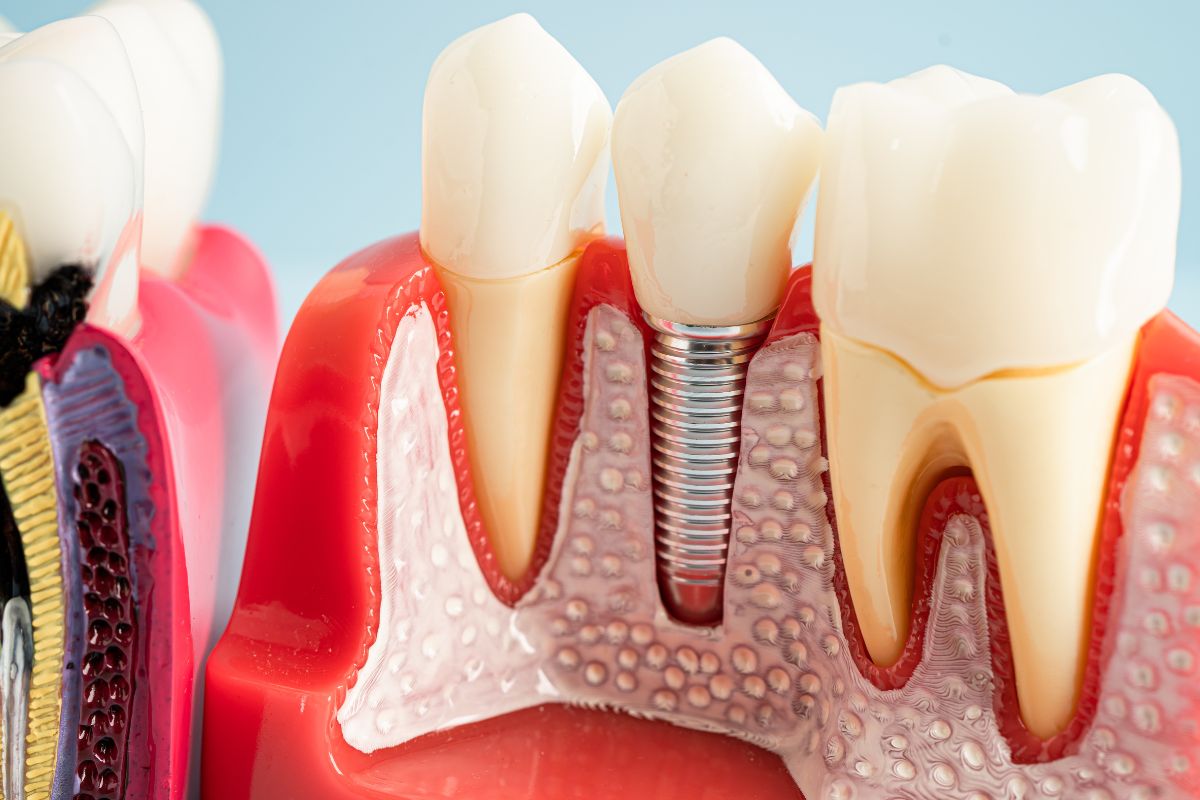
During an immediate dental implant procedure, the damaged tooth is carefully removed while preserving as much surrounding bone as possible. The surgeon then positions the implant post in the jawbone. Depending on the site’s anatomy, the surgeon may also use bone grafting material around the implant.
Immediate placement can reduce the number of surgical appointments. However, faster placement does not mean the implant is ready for normal chewing right away. The implant still needs time to integrate with the jawbone.
What Makes Someone a Candidate for Same-Day Implant Placement?
We do not recommend immediate placement based on convenience alone. Long-term implant stability matters more than completing treatment quickly.
Several factors help us determine whether this approach is appropriate.
Sufficient Jawbone
The implant needs adequate healthy bone for initial stability. If significant bone has already been lost around the tooth, immediate placement may be difficult or inappropriate.
Before deciding, the dentist evaluates the width, height, density, and shape of the available bone.
Condition of the Extraction Site
Severe destruction of the bone surrounding a tooth can affect implant placement. The dentist must also evaluate inflammation or infection and determine whether the site can be thoroughly cleaned and safely managed.
The presence of infection does not automatically answer whether immediate placement is possible. The extent of the infection, available healthy bone, and other clinical factors all matter.
Healthy Gum Tissue
Healthy soft tissue helps protect the surgical site and contributes to the appearance of the final restoration. Active periodontal disease may need to be addressed before implant treatment proceeds.
Ability to Achieve Implant Stability
One of the most important requirements is primary stability. This means the implant must be firmly supported by the bone when it is placed.
If the implant cannot achieve adequate stability after extraction, allowing the area to heal before implant placement may provide a more predictable approach.
Overall Health and Healing
Certain medical conditions, medications, smoking, and other health factors can affect healing. Your dentist should review your complete medical and dental history before planning treatment.
What Happens During Same-Day Extraction and Implant Placement?
Planning begins before the tooth is removed. We first evaluate the tooth and surrounding tissues and use appropriate dental imaging to assess the available bone and anatomy.
The treatment generally involves several stages:
- Evaluation and treatment planning: The dentist examines your mouth and reviews imaging to determine whether immediate placement appears feasible.
- Careful tooth extraction: The damaged tooth is removed while attempting to preserve the surrounding socket and bone.
- Cleaning the site: The extraction socket is thoroughly cleaned and inspected.
- Implant placement: A titanium implant post is positioned within the jawbone where it can obtain sufficient stability.
- Bone grafting when indicated: Grafting material may be placed to help manage gaps or areas where additional bone support is needed.
- Healing: The implant remains protected while the surrounding bone heals and integrates with its surface.
- Final restoration: Once healing is sufficient, the implant can support the final replacement tooth.
At our dental practice, implant treatment generally involves implant placement, healing and osseointegration, and placement of the artificial tooth. The healing phase is essential because it creates the stable foundation needed for the restoration.
Does “Same-Day Implant” Mean You Get a Permanent Tooth That Day?
Not necessarily. This is an important distinction.
Immediate implant placement means the implant post is inserted on the same day as the extraction. Immediate loading means a temporary restoration may be attached to the implant shortly after placement.
These are separate clinical decisions.
Some patients may receive a temporary tooth for appearance while the area heals. That temporary restoration may be designed to avoid or minimize biting pressure. Other patients may need the implant covered or protected during healing.
The permanent crown is generally placed only after the implant has achieved adequate integration and the surrounding tissues are ready.
What Are the Potential Benefits of Immediate Implant Placement?
For an appropriate candidate, combining extraction and implant placement may offer several advantages.
Fewer Surgical Visits
Combining extraction and implant placement can eliminate a separate implant-placement surgery months later.
Shorter Overall Treatment Timeline
Because the implant begins healing immediately after extraction, some patients may reach the restorative stage sooner than they would with a delayed protocol.
Earlier Tooth Replacement Planning
Immediate placement begins the replacement process as soon as the damaged tooth is removed. This can be particularly appealing when a visible tooth is involved.
Preservation of the Extraction Site
Placing an implant at the time of extraction may help support the surrounding tissues, although natural bone remodeling still occurs after a tooth is removed.
These benefits are meaningful only when immediate treatment is clinically appropriate. Trying to accelerate treatment in an unfavorable site can introduce unnecessary risk.
When Is It Better to Wait After an Extraction?
Sometimes delayed implant placement gives the mouth a healthier foundation for treatment.
We may recommend waiting when there is:
- Significant bone loss around the tooth
- Inadequate bone for initial implant stability
- Extensive damage to the socket walls
- Active gum disease requiring treatment
- A need for substantial bone grafting
- Soft-tissue conditions that require healing
- Medical or behavioral factors that may interfere with healing
In these situations, you may extract the tooth first. The area is then allowed to heal, with bone grafting performed when indicated. You can reconsider implant placement once the site is ready.
Waiting does not mean implant treatment has failed or that you are not a candidate. It may simply be the safer sequence for your anatomy and oral health.
Why Might Bone Grafting Be Needed After Tooth Extraction?
After a tooth is removed, the bone that previously supported its root begins to remodel. Bone grafting can help maintain or rebuild the structure needed to support future implants.
Serenity Dental offers bone grafting as part of its restorative services, allowing treatment planning to address sites that may need additional bone support.
In some cases, grafting can occur at the same appointment as extraction and implant placement. In others, grafting may need to heal before the implant is inserted.
The appropriate sequence depends on how much healthy bone remains and whether you can achieve adequate implant stability.
How Long Does a Dental Implant Take to Heal?
Even when extraction and placement happen together, biological healing takes time.
During osseointegration, bone grows and bonds around the implant surface, helping create the stable foundation needed for the replacement tooth. Serenity Dental explains that this healing phase may take several months, and the overall timeline varies according to individual needs.
Your dental implant procedure timeline may also be longer if bone grafting or other preparatory treatment is required.
Healing should not be rushed. Allowing adequate integration before placing full biting forces on the implant helps protect the foundation supporting the final restoration.
What Can Affect Healing After Immediate Implant Placement?
What you do after surgery can influence recovery. We generally want patients to protect the surgical area and follow their postoperative instructions carefully.
Important steps may include:
- Keeping the mouth clean according to your dentist’s instructions
- Avoiding chewing directly on the surgical site
- Taking prescribed or recommended medications correctly
- Avoiding smoking and tobacco
- Attending scheduled follow-up visits
- Reporting increasing swelling, persistent bleeding, severe pain, or other unusual symptoms
Your dentist may provide additional instructions based on where the implant was placed and whether grafting was performed.
Is Immediate Implant Placement Better Than Delayed Placement?
Neither option is universally better.
Immediate placement can be highly useful when the extraction site has adequate bone, healthy surrounding tissues, and conditions that allow the implant to obtain strong initial stability. Delayed placement may be preferable when the area needs time to heal or rebuild.
Clinically, the goal is not to choose the fastest option. The goal is to choose the timing that provides a stable foundation for long-term function.
That is why an individualized examination matters before beginning a dental implant procedure.
How We Evaluate Implant Patients
When you visit our office, we look beyond the missing or damaged tooth. Implant planning requires an assessment of the entire treatment area.
We consider factors such as:
- The reason the tooth needs extraction
- Bone volume and condition
- Gum and periodontal health
- Location of the tooth
- Bite forces in the area
- Neighboring teeth
- Overall medical history
- Smoking or tobacco use
- Whether grafting may be required
- Expectations for the final restoration
We emphasize clear communication and explain treatment options before care begins. Our implant service follows a planned sequence of placement, healing through osseointegration, and final restoration.
This comprehensive evaluation helps us determine whether immediate placement or a staged approach makes more sense for your mouth.
Plan Your Tooth Replacement Before the Extraction
If you know a tooth cannot be saved, discussing replacement before it is extracted can be valuable. It gives your dentist an opportunity to evaluate whether the site might support immediate implant placement and plan the extraction accordingly.
For patients, this can keep extraction and replacement from becoming two unrelated decisions.
We evaluate the condition of your tooth, jawbone, gums, and bite before recommending a treatment timeline. Whether your dental implant procedure can begin on the day of extraction or should follow a healing period, our priority is creating a stable foundation for your replacement tooth.
If you have been told that a tooth needs to be removed, book an appointment to discuss whether same-day implant placement may be an option for you.